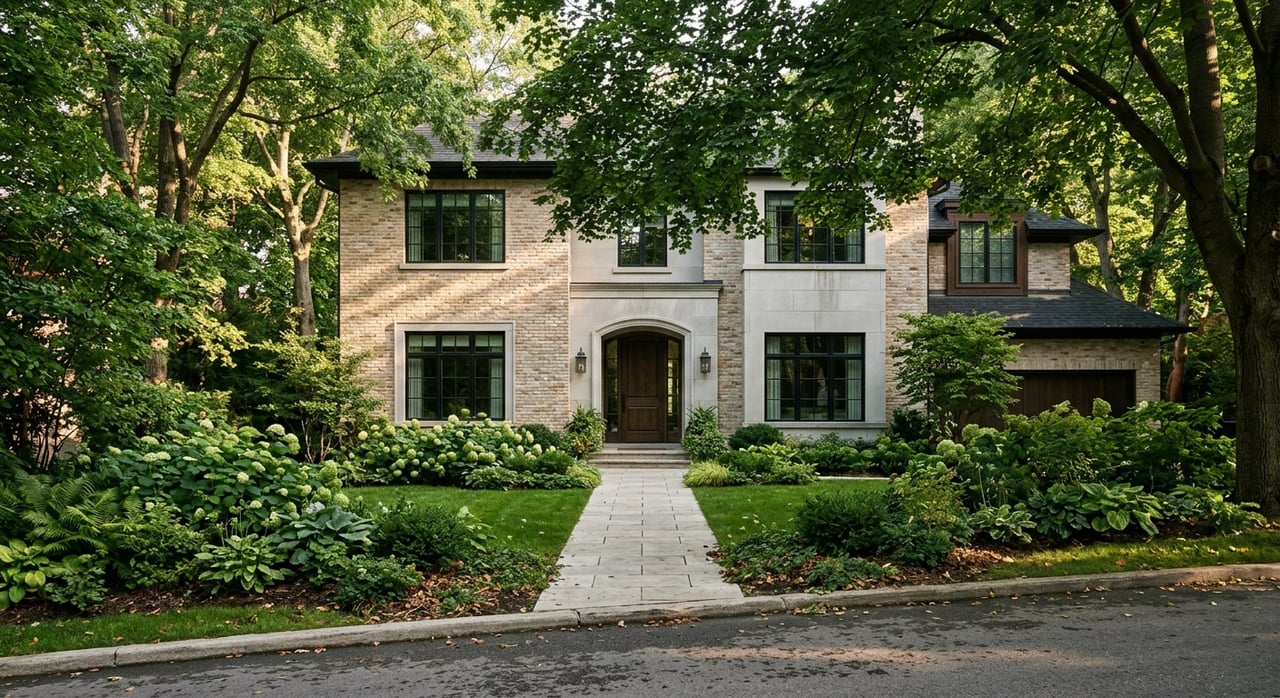
If you want a North York neighbourhood that feels calm without feeling cut off, St. Andrew-Windfields deserves a closer look. This is the kind of area that appeals to buyers who value privacy, greenery, and room to breathe, but still need practical access to transit, highways, and everyday essentials. In this guide, you’ll get a clear look at what daily life feels like here, from ravine trails and parks to clubs, dining, and commuting. Let’s dive in.
What St. Andrew-Windfields Feels Like
St. Andrew-Windfields is City of Toronto neighbourhood #40, and its housing profile helps explain the area’s character. According to the City’s 2016 neighbourhood data, single-detached homes make up 51% of the housing stock, with semi-detached, row, duplex, and apartment homes filling out the rest. Owner households also outnumber renter households.
In practical terms, that points to a mature, low-rise residential setting. You are more likely to notice quiet streets, private lots, and a residential rhythm than a dense main street or condo-heavy skyline. For many buyers, that is exactly the appeal.
A Neighbourhood With Estate Roots
Part of St. Andrew-Windfields’ identity comes from the legacy of the Windfields estate. The City describes Windfields as a 20-acre country estate on Bayview Avenue, set on former rolling farmland with heritage woodlots, orchards, and a circular driveway.
That history still shapes how the area feels today. City heritage materials for nearby properties point to large frontages, deep setbacks, circular driveways, and expansive landscaped grounds, while current notices also show that some parcels continue to attract redevelopment interest. The result is a neighbourhood where traditional larger-lot homes and selective newer infill can exist side by side.
Parks Shape Daily Life Here
One of the biggest lifestyle advantages in St. Andrew-Windfields is how closely outdoor space is woven into the neighbourhood. This is not just about one park around the corner. It is about a broader green system that supports walking, recreation, and a quieter daily pace.
Windfields Park at 2451 Bayview Avenue is publicly accessible through the Wilket Creek Trail. The City notes that this trail connects to Wilket Creek Park and Sunnybrook Park, while nearby Edwards Gardens adds a more formal garden destination to the same network.
That matters because it changes how you use the area. Instead of thinking about parks as isolated stops, you can think of them as part of a connected ravine landscape that encourages longer walks, repeat visits, and a stronger connection to nature.
Ravine Access Adds a Different Kind of Value
In many Toronto neighbourhoods, green space means a small local park or playground. In St. Andrew-Windfields, the ravine system gives you something more immersive.
The trail connections create a setting that feels layered and expansive. For buyers who place value on outdoor access, that can be a meaningful part of the neighbourhood’s long-term appeal.
Recreation Goes Beyond Casual Use
St. Andrew-Windfields also supports a more active lifestyle if you want more than just walking trails. York Mills Valley Park at 3865 Yonge Street is one of the neighbourhood’s important recreation anchors, and it is also home to organized tennis through Valley Tennis Club.
The City approved resurfacing of the outdoor courts there in 2025. It is also improving the playground at Sandover Park in 2026 near York Mills Road and the Don Valley Parkway.
These updates suggest a neighbourhood where public recreation spaces see regular use. Whether your routine includes tennis, walking, or time at the playground, the area offers more than occasional park visits.
Clubs Are Part of the Lifestyle Mix
Private clubs are a real part of the lifestyle conversation around St. Andrew-Windfields. For some buyers, that may not matter much. For others, it can be one of the neighbourhood’s most attractive features.
Nearby Donalda Club offers a 6,686-yard golf course, 12 Har-Tru clay tennis courts, curling ice, golf simulators, a pool with a slide and splash pad, squash courts, and five dining options. Toronto Cricket Skating and Curling Club describes itself as a private member club with tennis, aquatics, skating, squash, fitness, curling, cricket, croquet, lawn bowling, a golf simulator, and kids’ programming.
If you value year-round recreation and a club-based social routine, these nearby options help define the area’s lifestyle. They add another layer to the neighbourhood beyond the homes and parks themselves.
Dining And Errands Are Practical, Not Flashy
St. Andrew-Windfields is not built around a dense restaurant strip or nightlife corridor. Instead, daily convenience tends to revolve around established dining spots, shopping centres, plazas, and club routines.
Windfields Restaurant at 801 York Mills Road has served families since 1994 and offers breakfast, all-day breakfast, and casual mains. York Mills Centre includes restaurants and cafés alongside transit access and highway connections.
Nearby shopping destinations expand your options further. Bayview Village groups dining into restaurants, quick service, and grocery, while CF Shops at Don Mills lists food-and-drink tenants including Taylor’s Landing, McEwan, and Danish Pastry House.
What That Means For Everyday Living
In some neighbourhoods, entertainment is the main attraction. Here, convenience tends to matter more.
Meals, errands, and casual meetups are often built into the flow of your day rather than treated as a destination event. For many households, that makes life feel more efficient and more relaxed.
Commuting Is More Balanced Than You Might Expect
A quiet residential setting does not mean you have to give up convenience. One of the strengths of St. Andrew-Windfields is that it works well as a car-and-transit hybrid neighbourhood.
York Mills Station is the area’s transit anchor. The TTC notes that the station includes a GO bus terminal on site, accessible entrances through York Mills Centre, bike parking, and passenger pick-up and drop-off.
Connecting TTC routes include 78 St Andrews, 95 York Mills, 96 Wilson, 97 Yonge, 995 York Mills Express, and 996 Wilson Express. For longer trips, the subway does much of the heavy lifting, while buses help connect local streets and nearby destinations.
Driving Access Stays Strong
If you drive regularly, the neighbourhood remains well connected. The City describes the Don Valley Parkway as a 15-kilometre expressway running from the Gardiner Expressway to Highway 401 and one of Toronto’s most important commuter corridors.
York Mills Centre also highlights easy and direct access to Highway 401. So while the streets themselves may feel calm, the area stays plugged into major city routes.
Who St. Andrew-Windfields Suits Best
St. Andrew-Windfields tends to appeal to buyers who see value in space, privacy, and a more established residential setting. If you are comparing it with denser North York or midtown areas, the difference often comes down to pace and form.
Here, the housing stock still leans toward detached homes. The park system is ravine-based, and private clubs are a meaningful part of the nearby lifestyle. At the same time, York Mills Station, York Mills Centre, the DVP, and Highway 401 help keep the area practical for commuting and daily errands.
That combination gives St. Andrew-Windfields a distinct position in Toronto. It feels more like an estate-style residential pocket than a dense urban village, while still offering the access many busy households need.
Why Buyers Keep It On Their Shortlist
For design-conscious buyers and households looking for long-term value, St. Andrew-Windfields offers a hard-to-replicate mix. You get a mature neighbourhood structure, a strong detached-home presence, connected green space, and access to recreation that extends beyond the public park system.
Just as important, the area is functional. It supports commuting, errands, and day-to-day routines without losing the quiet, residential atmosphere that makes it stand out in the first place.
If you are weighing where St. Andrew-Windfields fits within the broader Toronto market, it helps to look beyond price and square footage. Lifestyle, access, lot context, and neighbourhood rhythm all matter here, and they often shape buyer decisions as much as the home itself.
If you want a precise view of how St. Andrew-Windfields compares with other Toronto neighbourhoods, Kristian Utley can help you evaluate fit, property quality, and long-term value with a clear strategy.
FAQs
What is the overall lifestyle in St. Andrew-Windfields like?
- St. Andrew-Windfields offers a quieter, low-rise residential lifestyle shaped by detached homes, private lots, ravine-connected parks, nearby clubs, and practical access to transit and highways.
What kinds of homes are common in St. Andrew-Windfields?
- City of Toronto data shows that single-detached homes make up 51% of the housing stock, with semi-detached, row, duplex, and apartment homes also present in the neighbourhood.
What parks and trails are near St. Andrew-Windfields?
- Windfields Park connects through the Wilket Creek Trail to Wilket Creek Park and Sunnybrook Park, and nearby Edwards Gardens adds another well-known green space within the same broader park network.
Are there recreation options in St. Andrew-Windfields besides parks?
- Yes. York Mills Valley Park supports recreation including tennis through Valley Tennis Club, and nearby private clubs offer amenities such as golf, tennis, aquatics, skating, fitness, curling, and dining.
How do you get around from St. Andrew-Windfields?
- York Mills Station is the main transit hub, with subway access, a GO bus terminal, and several TTC bus connections, while driving access is supported by the Don Valley Parkway and Highway 401.
Is St. Andrew-Windfields more about convenience or nightlife?
- It is more about convenience. Dining and errands are typically centered around restaurants, shopping centres, plazas, and clubs rather than a dense nightlife district.